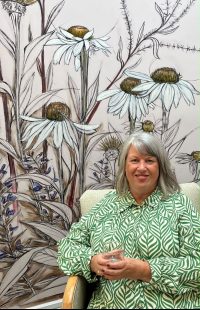
I'm Sharon
I’m a BACP‑registered and NCPS‑accredited Integrative Counsellor, Parts Work Practitioner, Couples Counsellor, and Supervisor based in Central Bristol and online. My work is rooted in attachment-focused and trauma-informed practice, with a particular interest in how early relational experiences shape the way we relate to ourselves, others, and the world.
I am deeply my commitment to offering a space that is steady, respectful, and attuned to the complexities of trauma and long-term emotional recovery. I am neurodivergent, LGBTQ+ affirming, and committed to creating a therapeutic relationship where you feel seen, respected, and met without judgement.
Alongside my private practice, I work with Pegasus Men’s Wellbeing Charity, supporting individuals within their Domestic Abuse and Sexual Violence services. I also support clients following inpatient care through the Steps Together Rehabilitation scheme, and I offer affiliate counselling with a Bereavement Charity. This work has given me extensive experience supporting people through crisis, transition, and long-term emotional recovery.
Outside of work, I stay grounded through time in nature, creative expression, and somatic practices that support regulation and balance. These are the places where I reconnect with myself, and they inform the calm, steady presence I bring to my work.
Who I Work With
Many of the people I work with grew up learning to put other people's needs first. You may have learned to stay strong, stay quiet or stay helpful to feel safe, accepted or connected.
You may have experienced childhood emotional neglect, developmental trauma, difficult family relationships or environments where your emotional needs were not consistently understood or supported.
Over time, this can lead to anxiety, self-doubt, people-pleasing, or a sense of disconnection from oneself. Therapy offers a space to gently understand these patterns and begin to reconnect with parts of yourself that may have been pushed aside. Alongside my private practice, I have worked within domestic abuse and sexual violence services, bereavement support, and rehabilitation settings.
Working Together
I work in a warm, collaborative, and thoughtful way. I won't tell you what to do, but I won't sit silently either.
I am actively engaged in the process and will offer reflections, questions, psychoeducation, and gentle challenges where they feel helpful. Therapy offers a space to slow down and explore what is happening beneath the surface. We look at how your past experiences may still be shaping your present relationships, emotional responses, beliefs about yourself, and nervous system patterns.
My approach integrates talking therapy with attachment-focused work, somatic awareness, Parts Work, and Polyvagal-informed practice.
Our work moves at a pace that feels manageable and safe for you.
Over time, many people notice that things begin to feel different.
They feel less driven by anxiety, shame, or self-criticism.
They become more connected to their emotions, needs, and boundaries.
They begin to understand themselves with greater compassion and develop healthier ways of relating to themselves and others.
The goal isn't to become someone different.
It's about reconnecting with parts of yourself that may have been overlooked, silenced, or lost along the way.
If you're thinking about starting therapy
You don't need to be in crisis to come to therapy.
You don't need to have all the answers or know exactly where to begin.
If something in you is curious about the possibility of change, we can start with an initial conversation and see whether working together feels right for you.
Sessions are available in Central Bristol and online across the UK.
Professional Training & Qualifications
Core Qualifications
- Level 7 Attachment-Focused Psychotherapeutic Couples Counselling and Supervision
- Foundation Degree in Integrative Counselling – Plymouth University
- Experiential Psychodynamic Course – Bedfordshire Centre of Therapeutic Studies
- Level 5 Somatic Trauma-Informed Therapy – CPCAB
- Advanced Certificate in Understanding and Applying Parts Theories – Temenos Education Ltd
Trauma, Attachment & Somatic Training
- Complex Trauma Certification Training – PESI UK
- Somatic Therapy for Complex Trauma – PESI UK
- Somatic Trauma Theory and Skills – Temenos Education Ltd
- Holistic Trauma-Informed Practice (Specialism Level 7) – The Weekend University
- Polyvagal Theory, Skills and Application – Temenos Education Ltd
- Somatic Yoga Incorporating Polyvagal Theory – N Science
Parts Work & Internal Systems
- Transitioning to Internal Family Systems – Natasha Wilson
- A Day on Parts – The Weekend University
- Binge Eating: Food Freedom Through Parts Work – Celia Clark
Neurodiversity Training
- Level 2 Certificate in Understanding Autism – Bridgwater and Taunton College
- Neurodiversity and Trauma – Trauma Geek
- A Day on Neurodiversity – The Weekend University
Domestic Abuse, Narcissistic Abuse & Sexual Violence
- Treating Survivors of Coercive Control in Narcissistic Abuse – PESI UK
- Working with Narcissism: Trauma, Abuse and Neglect – PESI UK
- Narcissistic Abuse In-Depth Workshop with Dr. Ramani – PESI AU
- Intimate Partner Violence: Trauma-Informed Interventions for Survivors – PESI Inc.
- Understanding Domestic Abuse – The Diversity Trust
- Understanding Domestic Abuse – IDAS
- Understanding Sexual Violence – IDAS
- Tier 3 Sexual Violence Training Programme – Axis Pathfinder
Additional Professional Development
- Equalities, Diversity and Inclusion – The Diversity Trust
- Women's Equalities Training – Womankind and Missing Link
- Living and Working Online Series – City of Bristol College with Diamond Leaf Training
- A Day on Addictions – The Weekend University
Therapy is not about becoming a different person, it is about coming into a more compassionate relationship with yourself.
© Sharon Newland Counselling and Psychotherapy
Developmental Trauma Psychotherapy in Central Bristol and Online
Powered by WebHealer